
Introduction
Miso soup is a gentle, soul-warming Japanese classic made with miso paste, tofu, wakame seaweed, and dashi broth. It is simple, nourishing, and deeply flavorful thanks to its umami-rich base. This soup is served daily in Japan — from breakfast tables to restaurant meals — and has become a worldwide favorite for its soothing taste and healthy ingredients.
Historical Background
- Origin in Japan: Miso soup dates back over 1,000 years and became common in Japanese households during the Heian Period (794–1185).
- Samurai Era Food: During the Kamakura period, samurai consumed miso soup for strength and stamina.
- Fermented Tradition: Miso paste is one of Japan’s oldest fermented foods made from soybeans, salt, and koji.
- Everyday Dish: By the Edo period, miso soup became a staple of the Japanese breakfast.
- Regional Flavors: Different regions in Japan developed their own versions — using red miso, white miso, mushrooms, or root vegetables.
- Modern Popularity: Today, miso soup is enjoyed worldwide as a healthy, probiotic-rich dish.
Ingredients (4 servings)
- 4 cups dashi (instant powder or homemade kombu–bonito stock)
- 3 tablespoons miso paste (white, red, or mixed)
- 1/2 cup soft tofu, cubed
- 2 tablespoons dried wakame seaweed
- 2 green onions, thinly sliced
- Optional add-ins:
- Mushrooms (shiitake, enoki)
- Daikon radish
- Spinach
- Cooked shrimp
- Noodles
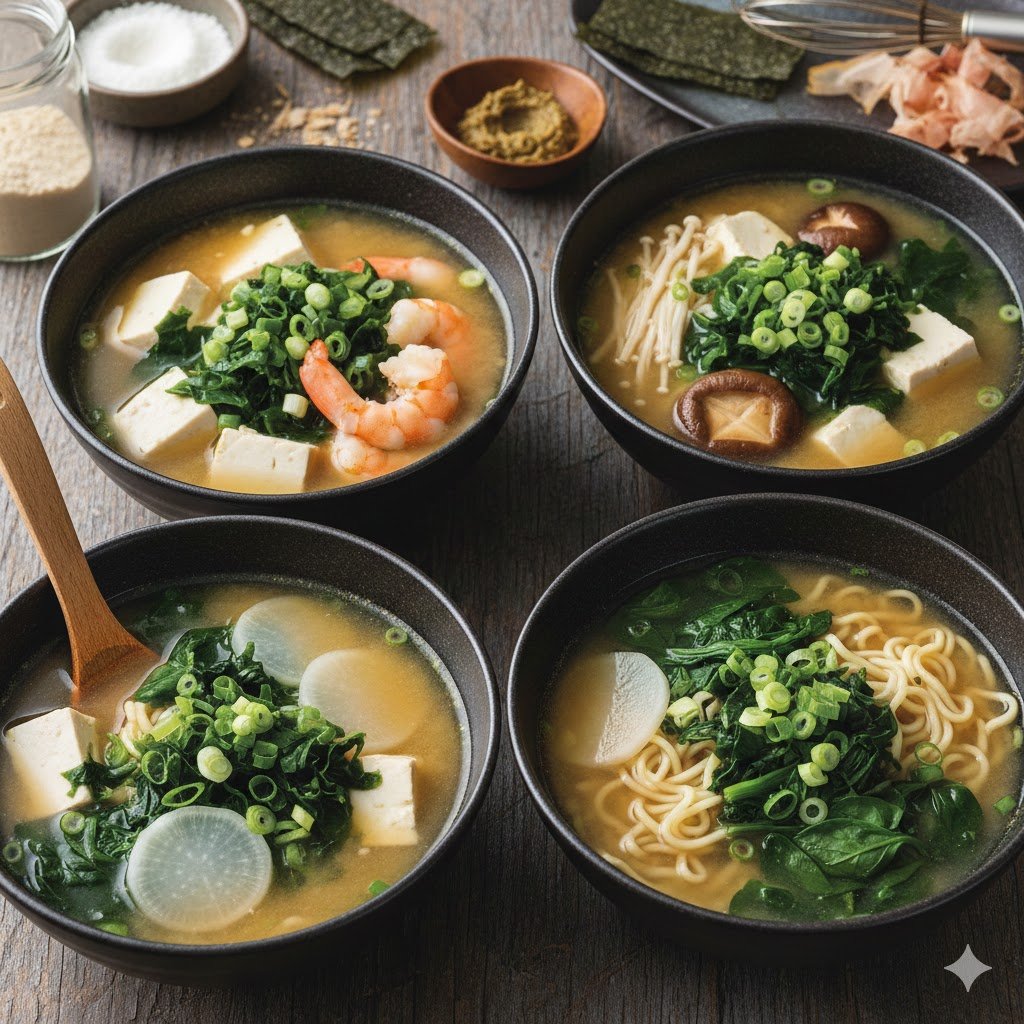
How to Make Miso Soup
Step 1 Rehydrate Wakame
- Add dried wakame to a small bowl of water.
- Let it soak for 5 minutes until it expands, then drain.
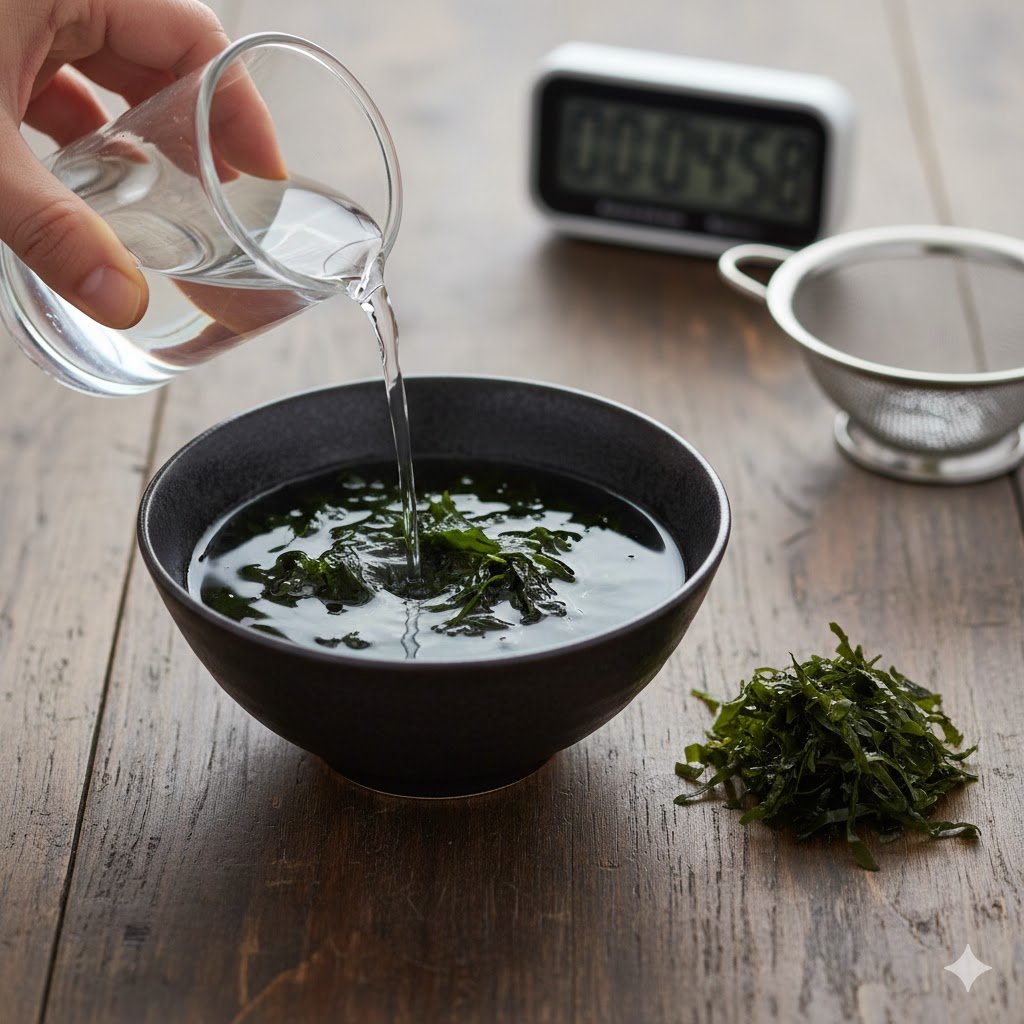
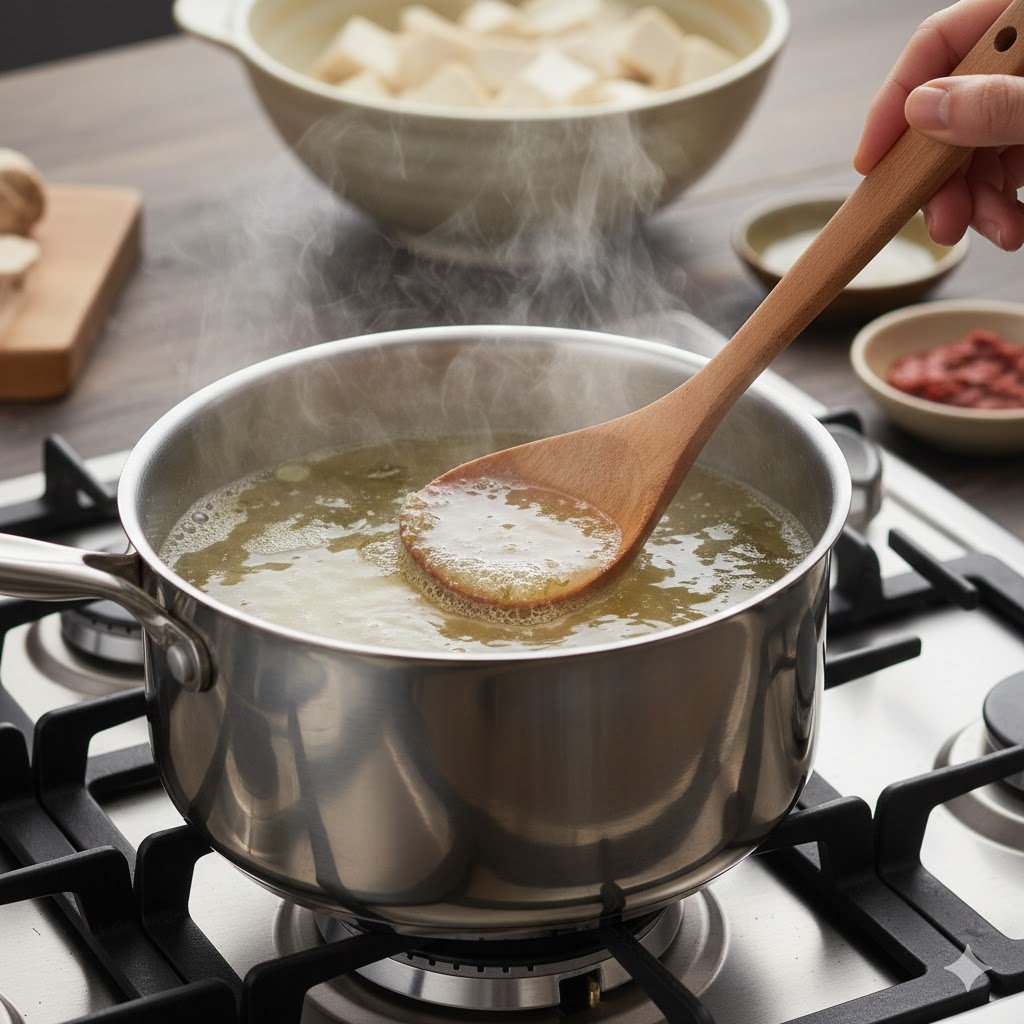
Step 2 — Heat the Dashi Stock
- Bring 4 cups of dashi to a gentle simmer in a saucepan.
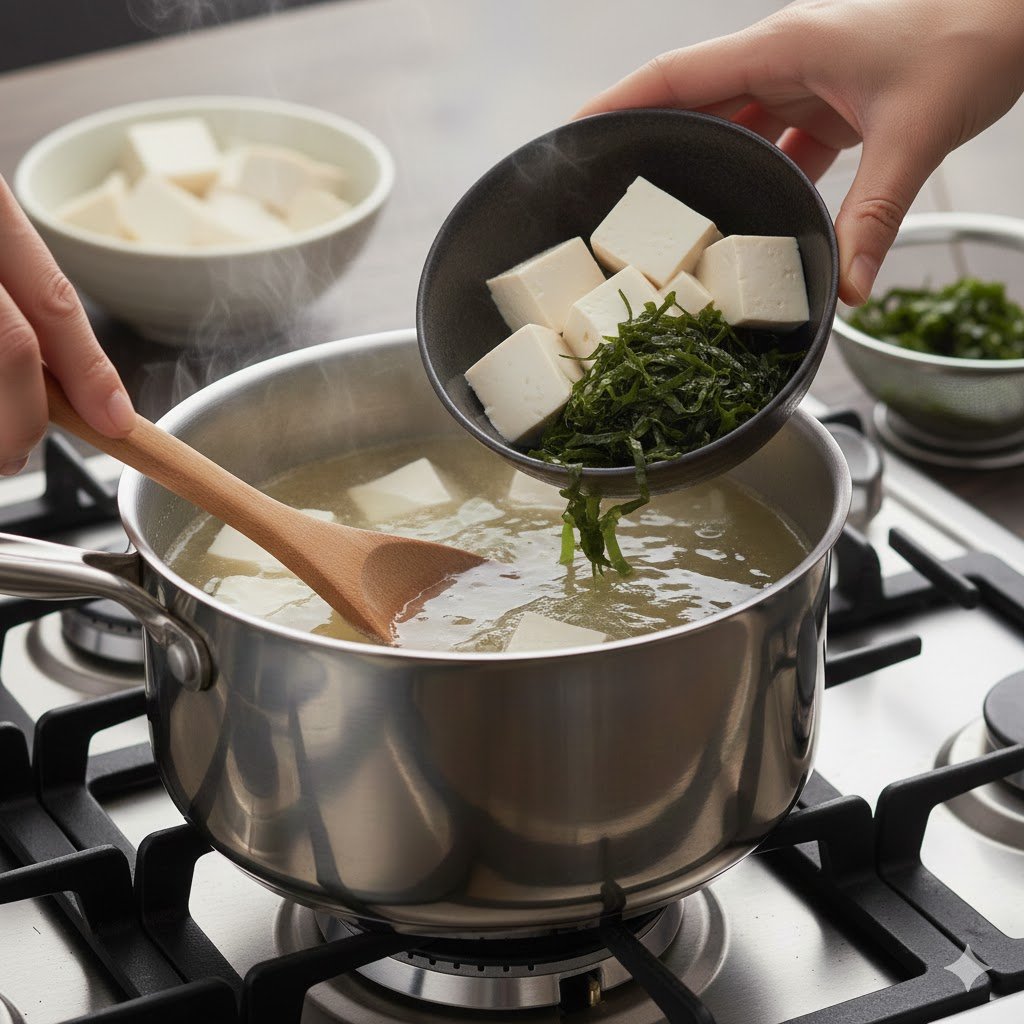
Step 3 — Add Tofu & Wakame
- Add the soft tofu cubes and rehydrated wakame.
- Keep the heat low so the tofu stays intact.
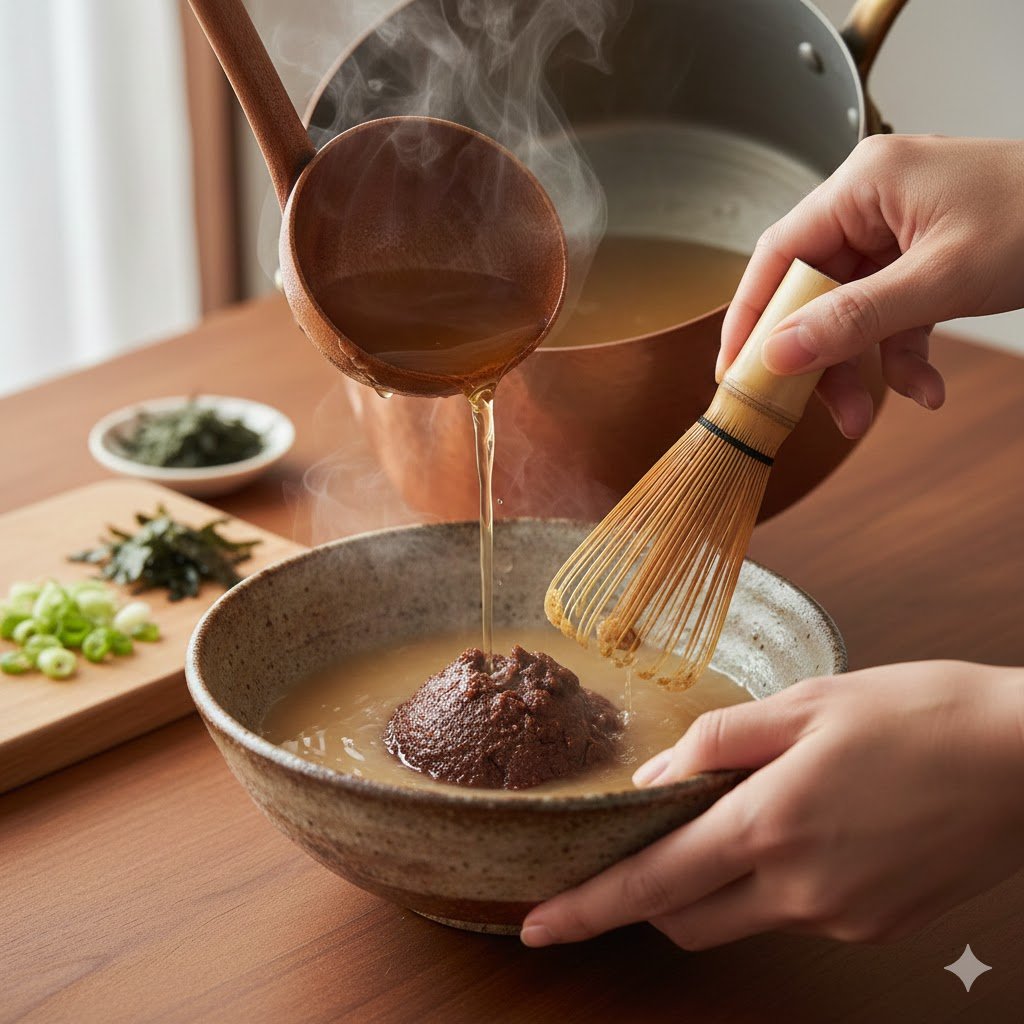
Step 4 — Dissolve the Miso
- Place miso paste into a bowl.
- Add 1 ladle of hot broth and whisk until dissolved.
- Pour the mixture back into the pot.
- Do not boil after adding miso.
Step 5 — Finish & Serve
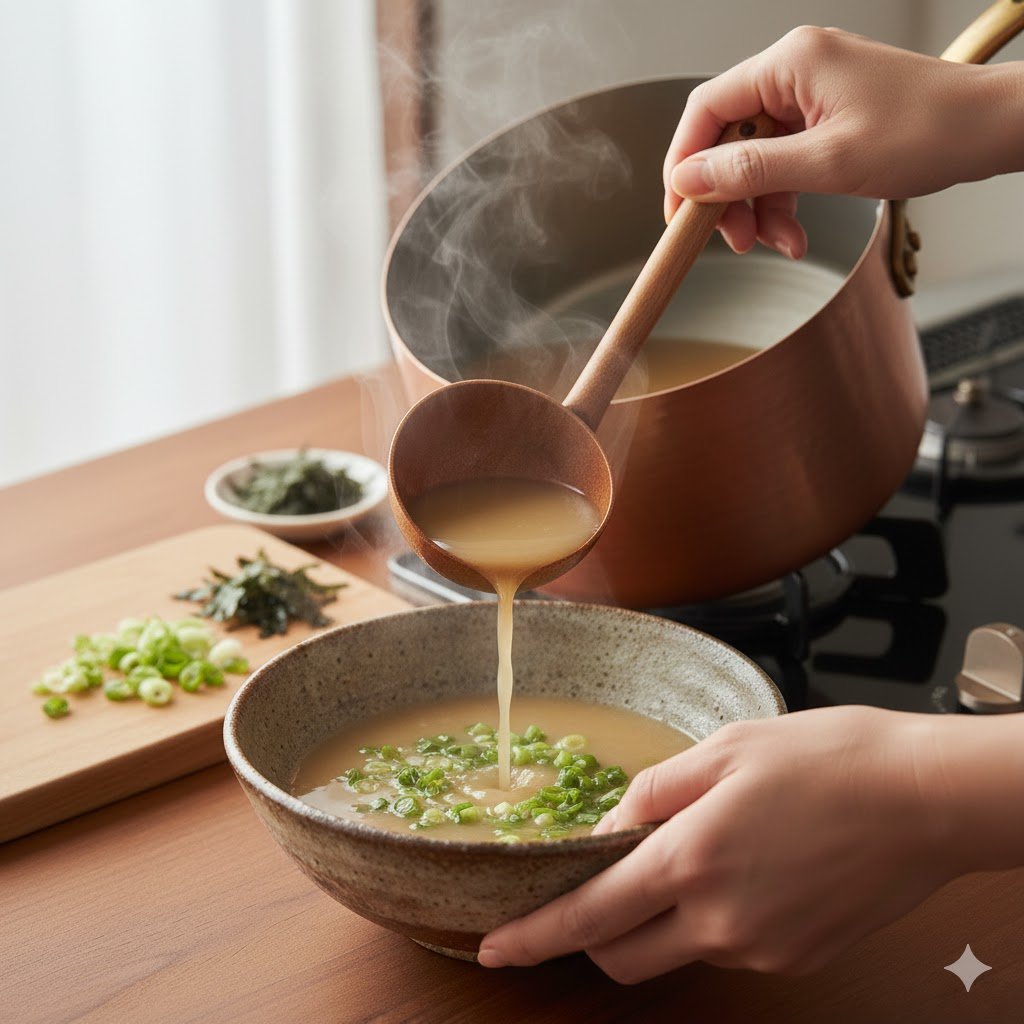
- Turn off the heat.
- Stir in green onions.
- Serve immediately.
Serving Suggestions
- Serve miso soup as a starter with sushi, tempura, noodles, or rice bowls.
- Add noodles to turn it into a light meal.
- Add silky mushrooms for a richer umami flavor.
- Serve with steamed rice and pickled vegetables for a traditional Japanese breakfast.
- Pair with Japanese dishes like:
- Teriyaki chicken
- Chicken katsu
- Yakisoba
- Grilled salmon
- Bento lunch
- For extra protein: add shrimp, chicken slices, or egg.

Storage Instructions
Refrigerator
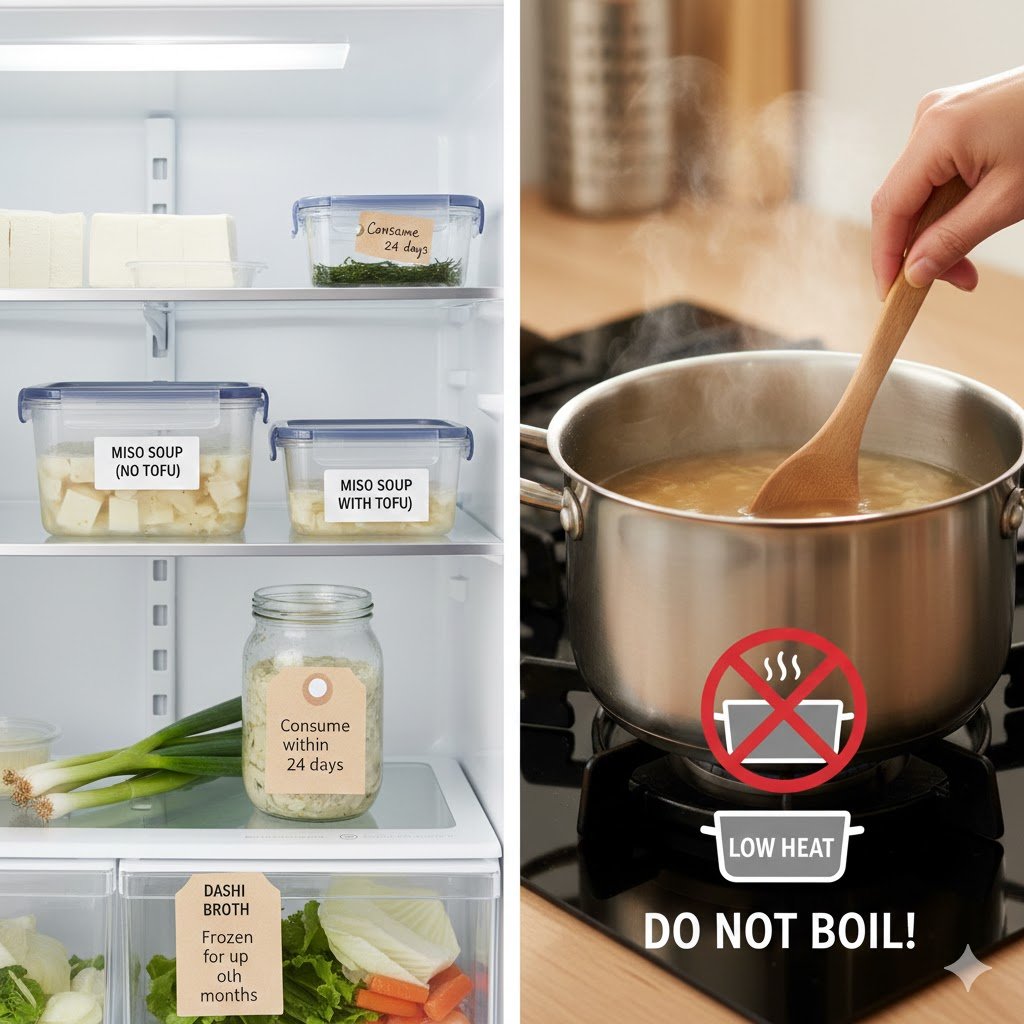
- Store miso soup without tofu for best texture.
- Lasts 2–3 days in an airtight container.
- If tofu is already inside, consume within 24 hours (tofu softens).
Freezer
- Do not freeze miso soup with tofu or seaweed — texture becomes mushy.
- You can freeze the dashi broth separately for up to 2 months.
- Add miso, tofu, and wakame fresh when reheating.
Reheating
- Reheat on low heat only.
- Do not boil the soup after miso has been added.
Nutrition (Per Serving)
| Nutrient | Amount |
|---|---|
| Calories | 75 kcal |
| Protein | 5 g |
| Fat | 3 g |
| Carbs | 7 g |
| Sodium | High (from miso) |
| Fiber | 1 g |


Pingback: Japanese Chicken Curry Recipe
Pingback: Pepper Jelly and Cream Cheese Appetizer Recipe Guide